

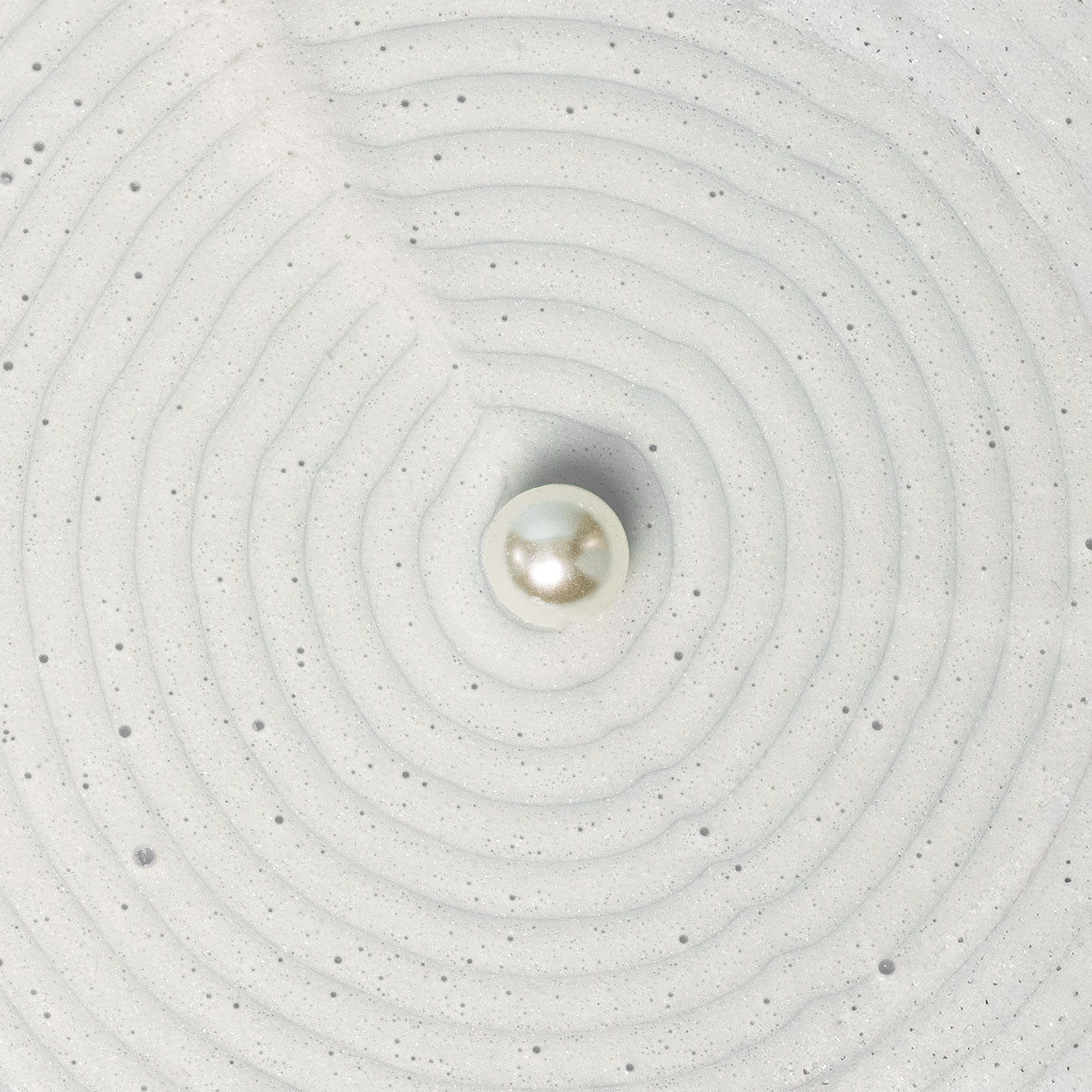

Pearl Powder Toothpaste

SCIENCE EDITION
The Ancient Ingredient Behind Every Akla Toothpaste Formula
There is an ingredient in Akla's toothpaste that has been used for over a thousand years in wellness traditions across East Asia, Persia, and Ayurvedic medicine and that you have almost certainly never seen on a commercial toothpaste label. Pearl powder. Not as a finishing touch or a marketing note, but as the secondary polishing agent in a Swiss formulation built around what actually belongs in a considered pearl powder toothpaste.
The fact that pearl powder is rare in oral care is worth understanding. It says something about the ingredient, the economics of mass production, and the kind of decisions that only get made when a New York dentist is co-founding the brand.
What Pearl Powder Actually Is
Pearl powder is finely milled freshwater or saltwater pearl, ground to a cosmetic-grade consistency fine enough to incorporate into formulations without causing abrasion above safe thresholds. The active component is calcium carbonate, the same mineral that forms the nacre of a pearl and that exists, in a different crystalline structure, in tooth enamel itself.
The use of pearl in health and beauty preparations is documented across diverse cultures, including Chinese imperial medicine, Persian cosmetic traditions, and Ayurvedic formulations, spanning more than a thousand years. The fact that pearl powder appears across multiple historical traditions illustrates its longstanding place in beauty and wellness practices, long before modern science began studying its properties. Pearl powder was used topically for skin luminosity, taken internally for mineral supplementation, and applied to the teeth long before clinical science had the vocabulary to explain why it helped.
What is pearl powder doing in a toothpaste, specifically? It is acting as a polishing agent — one with a natural abrasivity profile that sits well within the thresholds recommend for daily use. Which brings us to the science.
The Calcium Carbonate Science
The measurement used to assess a dental abrasive's safety is RDA — Relative Dentin Abrasivity. Dentine abrasion is cumulative. A toothpaste used twice a day touches enamel more than seven thousand times in a single decade. The abrasive choice is not a cosmetic detail, it is a decision with a ten-year consequence.
Pearl powder is a naturally gentle polishing ingredient. When incorporated into a well-formulated toothpaste, it can contribute to a finished formula with a low Relative Dentin Abrasivity (RDA), making it suitable for daily use. It polishes the tooth surface by removing the thin protein film — the acquired pellicle — that forms within minutes of brushing and that traps the staining agents from coffee, tea, and food. This is physical polishing, not chemical intervention. The calcium carbonate does not bleach or alter the colour of enamel. It reveals the surface that was already there.
Akla's co-founder Dr. Elena, is a New York dentist with decades of clinical practice. Pearl powder's inclusion was not only an aesthetic choice, it was a decision made by someone who knows precisely what happens to enamel over years of daily contact with an abrasive, and who wanted that contact to be as gentle as possible.
Pearl Powder Whitening – Polish, Not Bleach
Pearl powder whitening works differently from the whitening in most commercial products, and it is worth being specific about how because the difference changes what you should expect and when. Peroxide-based whitening, the active mechanism in most whitening toothpastes and professional treatments, works chemically by oxidising pigment molecules within the enamel structure. It changes the colour of what is inside the tooth. It can be effective, and with repeated use it can also cause sensitivity, because it penetrates the enamel surface to do its work.
Pearl powder does neither of those things. It polishes the exterior surface by removing accumulated stain and the acquired pellicle, and the whitening effect is the natural color of clean, polished enamel. It happens gradually, without sensitivity, and it does not reverse when you stop using the product, because what you are seeing is your tooth, not a treatment applied over it.
The finish is perceptibly different to most toothpastes. A smooth, almost luminous quality to the tooth surface that most people describe as cleaner rather than whiter, which is, in fact, the more accurate description of what has happened.
Why Pearl Powder Toothpaste Is Rare
The reason pearl powder appears so infrequently in oral care is straightforward: cost and formulation precision.
Cosmetic-grade pearl powder, sourced and milled to a particle size suitable for oral care formulations, is considerably more expensive than the ingredients typically used in conventional toothpaste. While pearl has a long history in beauty and wellness traditions, its use in modern oral care remains uncommon due to both cost and formulation complexity.
The second reason is formulation. Pearl powder performs best as part of a broader system, contributing gentle polishing and refinement while complementary ingredients address enamel health and overall cleaning performance. In Akla’s formula, pearl powder is paired with 5% NanoXIM CarePowder™ hydroxyapatite, a high-quality biomimetic mineral structurally similar to the mineral found in tooth enamel. Together with carefully selected cleaning and polishing agents, these ingredients work in concert: hydroxyapatite supports enamel remineralisation, while pearl powder contributes a refined polishing effect and a distinctive sensorial character.
The Swiss formulation context matters here too. The consistency and stability of a formula and the way ingredients interact over the shelf life of a product, is directly affected by the precision of the manufacturing environment. This is the same logic behind the aluminium toothpaste tube: a brand that considered what the container should be made of has asked the same question about every ingredient inside it.
What To Look For In A Pearl Powder Toothpaste
Pearl powder can appear on a toothpaste label as a trace ingredient added for marketing rather than function. On an INCI list, it will appear as Margarita Powder or Hydrolyzed Pearl and its position in the list indicates relative concentration. Listed higher, present in greater quantity.
The more useful question is what it is paired with. Pearl powder as a standalone polishing agent cleans and refines the surface of the tooth. For enamel remineralisation, the structural repair that matters for long-term tooth health, it needs a co-ingredient that works below the surface. Hydroxyapatite is currently the most thoroughly studied fluoride-free option for that function, with a safety profile reviewed at European regulatory level.
A fluoride-free toothpaste that combines both is doing two things simultaneously: rebuilding and refining. That is the complete picture of what daily oral care can be when the ingredient list is built with intention.
Common questions about pearl powder toothpaste
Does pearl powder actually whiten teeth?
Yes, through polishing rather than bleaching. Pearl powder removes the thin protein film and accumulated surface stain from the tooth, revealing the natural colour of clean enamel. The whitening effect is gradual and does not cause sensitivity because it is a physical process. The surface is being refined, not chemically altered. It works on a longer timeline than peroxide-based treatments but the result is the tooth's natural surface, undisturbed.
Is pearl powder safe to use in toothpaste every day?
Pearl powder has a naturally low Relative Dentin Abrasivity (RDA), meaning it polishes without the cumulative wear on enamel that higher-abrasive ingredients can cause over years of daily use. Used as a secondary polishing agent in a balanced formulation, as it is in Akla's toothpaste, it is appropriate for twice-daily use. As with any oral care product, if you have specific enamel concerns, a conversation with your dentist is the right starting point.
What is pearl powder in toothpaste?
Pearl powder is finely milled freshwater or saltwater pearl composed primarily of calcium carbonate. In toothpaste, it acts as a gentle polishing agent that helps remove surface stains while remaining suitable for daily use. It has a long history of use in beauty and wellness traditions and is uncommon in modern oral care formulations.
Why does Akla use both pearl powder and hydroxyapatite?
Pearl powder and hydroxyapatite serve different purposes. Pearl powder gently polishes the tooth surface and helps remove surface stains, while hydroxyapatite supports enamel by supplying the same calcium and phosphate minerals naturally found in teeth. Together they create a fluoride-free toothpaste designed to both refine and support enamel.

